

News
3rd March, 2026Why Every Queenslander Should Book a Regular Skin Check
If you’ve lived in Queensland for any stretch of time, you already know the sun here plays by different rules. It’s brighter, harsher, and more relentless than almost anywhere else on the planet. It’s also what makes life here so good: long summers, outdoor weekends, sport, beach trips, backyard barbecues.
But that same sunshine comes with a cost, and for too many, it’s one that goes unpaid until it’s far more serious than it needed to be.
Queenslanders are among the most at Risk for Skin Cancer
Australia has one of the highest rates of skin cancer in the world, and Queensland sits right at the top of that list. The state’s proximity to the equator means UV radiation levels are significantly higher here than in southern states, and that exposure accumulates over a lifetime. Two in three Australians will be diagnosed with skin cancer by the time they turn 70, and melanoma (the most dangerous form ) claims thousands of lives each year nationally.
What makes this particularly sobering is that many of those diagnoses could have been caught earlier with routine checks. Melanoma detected at an early stage has a survival rate above 95%. Detected late, that figure drops dramatically. The difference, in many cases, is simply whether someone took the time to have their skin looked at.
What Actually Happens During a Skin Check?
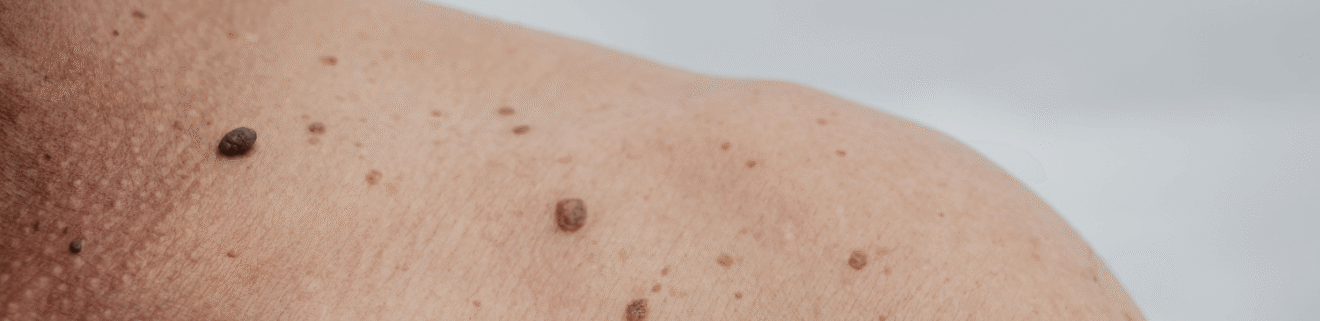
A skin check with a GP is a thorough, full-body examination of your skin, moles, freckles, and any spots that have changed or appeared recently. The doctor will look for irregular shapes, unusual colouring, spots with uneven borders, or lesions that have grown or changed over time — the kinds of things that are easy to miss on yourself, especially on your back, scalp, or behind the ears.
If something looks suspicious, your GP can refer you for a biopsy or to a dermatologist for further assessment.
In many cases, a mole check is reassuringly straightforward and you’ll walk out with peace of mind.
But when something does need attention, catching it at the check rather than months later makes an enormous difference to your treatment options and outcomes.
Who Should Be Getting Checked (and How Often)?
The honest answer is: most people.
But some Queenslanders are at higher risk and should be particularly proactive about booking in. This includes people who:
- have fair skin, light eyes, or red or blonde hair
- have a history of sunburn, particularly blistering burns in childhood
- spend or have spent significant time outdoors for work or recreation
- have a large number of moles or freckles
- have a personal or family history of skin cancer or melanoma
If you fall into one or more of those categories, an annual skin cancer check is strongly recommended. For those with a history of skin cancer or melanoma, your GP may advise more frequent monitoring — every six months in some cases.
For everyone else, a check every one to two years is a reasonable baseline. Your GP can assess your individual risk profile and advise you on the right frequency for your circumstances.
“I’d Notice If Something Was Wrong”
This is one of the most common reasons people put off booking a skin check, and it’s understandable. But skin cancer doesn’t always look the way people expect it to. Nodular melanoma, for example, can look like an ordinary pink or red lump rather than the irregularly shaped dark mole most of us picture. Basal cell carcinoma — the most common form of skin cancer — can resemble a small, shiny patch or a sore that won’t heal.
Knowing how to check for skin cancer at home is genuinely useful, and dermatologists encourage self-examination between professional checks. But the trained eye of a GP, particularly one experienced in skin checks, will pick up things that are easy to overlook or dismiss. This is not about being alarmist — it’s about being practical.
Other Skin Cancers Worth Knowing About
While melanoma gets the most attention, it’s worth knowing that there are other forms of skin cancer that also require treatment. Basal cell carcinoma and squamous cell carcinoma are both far more common than melanoma and, while generally less aggressive, still need to be identified and managed appropriately. Left untreated, they can grow, spread, and become significantly harder to treat. A skin check covers all of these, not just melanoma.
Making It a Habit, Not a Worry
The best thing about establishing a routine skin check is that it removes the anxiety of uncertainty. Instead of wondering whether that spot has changed, or trying to remember when you last had your skin looked at, you have a regular appointment in the calendar and a trusted GP keeping track of any changes over time.
Think of it the same way you’d think about a dental check-up or an eye test — preventive healthcare that you do not because something is wrong, but precisely so that something doesn’t have to go wrong before you act.
If it’s been a while since your last skin check — or if you’ve never had one — now is a sensible time to book in. The doctors practising at The Carina Medical and Specialist Centre are experienced in conducting thorough skin checks and can assess your individual risk factors, discuss your history, and keep a watchful eye on any areas of concern over time.
Don’t wait for a spot to change to take action. Book your skin check in Brisbane today and get ahead of it.