
Skin Cancer Awareness: Early Detection Saves Lives
Australia has one of the highest rates of skin cancer in the world, and at least two in three Australians will be diagnosed with some form of it in their lifetime. The encouraging news is that most skin cancers can be treated successfully when they are found early.
Knowing what to look for, checking your own skin regularly, and booking a professional check when something seems off are three simple habits that can make a real difference.
This article explains the common types of skin cancer, the signs and symptoms worth watching for, and why early detection matters so much.
Why skin cancer is so common in Australia
The main cause of skin cancer is exposure to ultraviolet (UV) radiation from the sun. Living under Queensland’s strong sun, often from a young age, means many people here build up a lot of UV exposure over a lifetime. That exposure gradually damages skin cells and raises the risk of cancer developing.
According to Cancer Council Australia, skin cancer is the most common cancer in the country, and melanoma is the most common cancer diagnosed in young Australians aged 15 to 29. Those figures sound confronting, yet they also point to something hopeful. Because skin cancer usually shows up on the surface of the skin, it is one of the few cancers you can often spot yourself before it becomes serious.
The main types of skin cancer
There are three main types of skin cancer, and they behave differently.
Basal cell carcinoma (BCC) is the most common and the least dangerous. It tends to grow slowly and rarely spreads to other parts of the body, but it still needs treatment. BCCs often appear as a pearly lump or a dry, scaly area that may bleed or fail to heal.
Squamous cell carcinoma (SCC) grows faster than a BCC and can spread if it is left untreated. It often looks like a thickened, red, scaly spot or a sore that does not heal.
Melanoma is less common but the most serious, because it can spread to other organs if it is not caught in time. Melanoma can appear as a new spot or as an existing mole that changes in size, shape, or colour. An early-stage melanoma that is found and removed promptly has a far better outcome than one that is found later.
Signs and symptoms to watch for
Skin cancers do not all look the same, so it helps to know the general warning signs. It is worth seeing a doctor if you notice any of the following:
- a new spot, lump, or scaly patch that looks different from the skin around it
- a mole or freckle that changes in size, shape, or colour over weeks or months
- a spot that itches, bleeds, or stings
- a sore that does not heal within a few weeks.
For moles in particular, many people use the ABCDE guide from healthdirect: Asymmetry, where one half does not match the other; Border, meaning edges that are uneven or blurred; Colour, where there is more than one colour or the colour is uneven; Diameter, usually larger than about 6 mm, though some spots are smaller; and Evolving, meaning any change over time. If a spot ticks one or more of these, it is worth having it looked at.
It is important to remember that not every unusual spot is cancer, and some skin cancers do not fit these patterns neatly. When there is any doubt, it is always safer to ask.
Why early detection saves lives
Early detection is the single most powerful tool against skin cancer. When a skin cancer is found while it is still small and confined to the top layers of the skin, treatment is usually straightforward and highly effective. Many early skin cancers are removed in a simple in-clinic procedure.
The picture changes once a skin cancer, and a melanoma especially, has had time to grow deeper or spread. Treatment then becomes more involved and outcomes are less certain. That is exactly why awareness matters so much. Catching a change early can turn a serious diagnosis into a minor one.
How to check your own skin
Checking your own skin takes only a few minutes and can be done at home. The doctors practising at Carina Medical and Specialist Centre encourage patients to get to know their skin, so that anything new or different stands out.
Use a well-lit room and a full-length mirror, or ask someone to help with hard-to-see areas. Look over your whole body, including your scalp, behind your ears, your back, the soles of your feet, and between your toes. These less obvious spots are easy to overlook. Taking photos can help you track whether a spot is changing over time.
Aim to do a self-check every few months, and more often if you have had skin cancer before or have a lot of moles. A self-check does not replace a professional examination, but it helps you catch changes between visits.
When to book a professional skin check
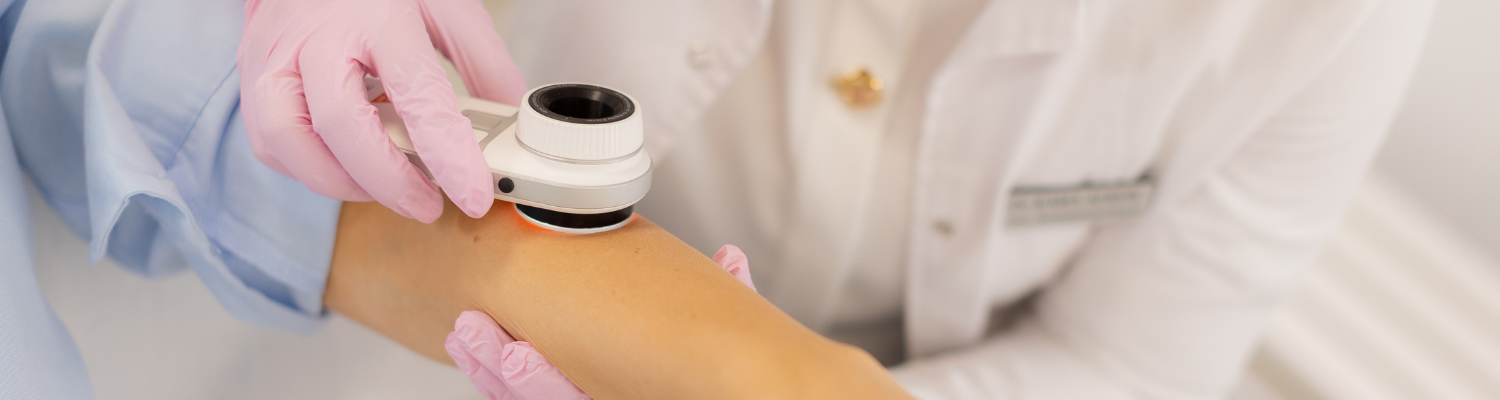
A professional skin check goes further than anything you can do at home. A doctor can use a dermatoscope, a special magnifying tool, to examine moles and spots closely and pick up changes that are hard to see with the naked eye.
The doctors practising at Carina Medical and Specialist Centre offer skin checks for the whole family, along with biopsies and minor procedures when a spot needs to be removed or tested. A full-body check usually takes around 10 to 15 minutes. It is a good idea to mention when booking that the appointment is for a skin check, as these visits often need a little extra time.
Regular checks are worth building into your routine, particularly for anyone who works outdoors, has fair skin, or has a family history of skin cancer. Men are especially encouraged not to put it off, as many common health concerns are easier to manage when caught early. For more on the value of routine checks, it is worth reading why every Queenslander should book a regular skin check.
Looking after your skin for the long term
Skin cancer awareness is not about worry. It is about knowing your skin, protecting it from the sun, and acting quickly when something changes. Sun protection, regular self-checks, and professional skin checks all work together to keep you safe.
If you have noticed a spot that concerns you, or it has simply been a while since your last check, the team at Carina Medical and Specialist Centre can help. Visit the general practice page to learn more about the care on offer, or get in touch to arrange an appointment.